You are currently exploring the Fundamentals Library, which is designed to provide a basic overview of the topics that are covered in other longer articles. This article is a part of the psychology section.
Goal Setting
Goal setting is a very popular topic in health and fitness. This is not surprising since goals are, in other words, a destination, a purpose behind what we do and why we decide to put in the effort. This is why most health & fitness activities or interventions involve goal setting, whether it's a conscious, organized process or not. Calisthenics and strength training are not different.
Technically, goal setting can have two different underlying contexts. On the one hand, it can be a strategic tool that we use to plan our long and short term training program. In this context, goals can be used as checkpoints on a roadmap, giving us the specific direction of where we are going. On the other hand, goal setting can also have a more psychological narrative and be a tool used as part of behavior change. Let's start with the latter context.
Goals Setting - Behavioral Change Context
The Problem with SMART Goals
Behavior change is a large and complicated area of psychological research. There are many models and theories used in the field, and none is universally accepted.
Why is it important? I think the key concept that we need to understand, especially as people who can sit around all day and develop very detailed programs and read about every little nuance of calisthenics and training, is that when it comes to results, the specifics of what we do are less important than long-term training adherence. And that, among many other things, is what behavior change is all about. But how does goal setting fit in?
Most people that ever dived in the topic of goals have heard of the SMART acronym:
- Specific
- Measurable
- Achievable
- Relevant
- Time-Bound
SMART goals are a very popular system used not only in fitness but in many other areas. However, they are not as supportive when it comes to behavior change because they lack a broader, more comprehensive look at one's values.
Levels of Abstraction
In my opinion, we can use a better framework, borrowed from the 2018 article by Bettina Höchli and colleagues. The whole idea is to link the goals of different levels of abstraction:
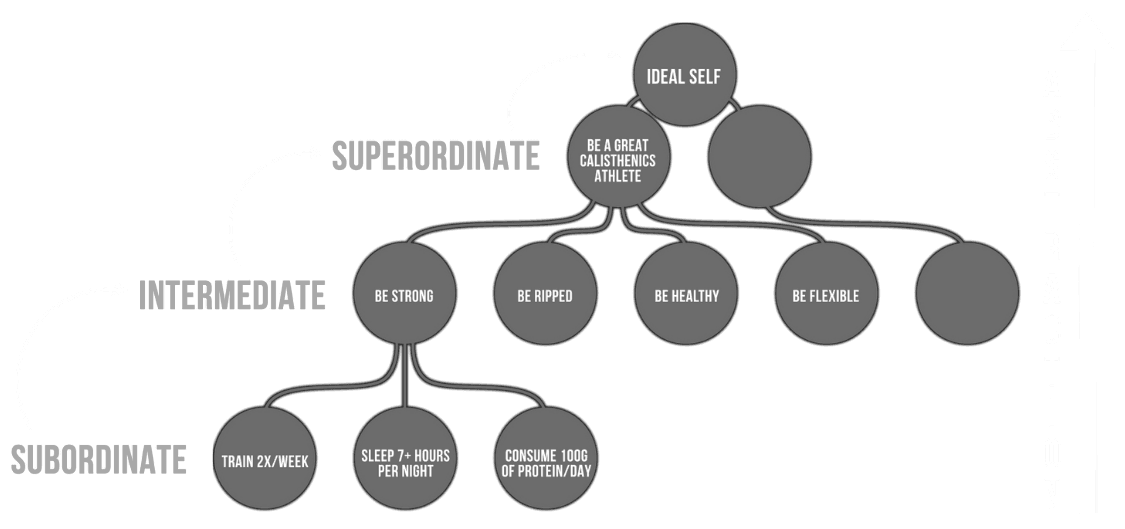
On top of the scheme there is an idea of an ideal self that any goal we set aims to fulfill. The goal that goes from that is a superordinate goal, which is at the highest level of abstraction. For example, be a great calisthenics athlete. Becoming a great calisthenics athlete is a goal of ourselves and our athletes, deeply ingrained in the identity.
Being on its own however, it doesn’t give enough concrete information and clarity. From this point we can set intermediate goals: be skilled and strong, have a good body composition, be healthy and flexible. These goals give more specificity, but they are still a bit abstract.
The third level are the subordinate goals that have the lowest level of abstraction. These are the actual action points, things that are very concrete and specific. In the context of behavioral change, these should be mainly process oriented goals instead of outcome oriented goals.
Process & Outcome Oriented Goals
Process-oriented goals focus on the actual behavior and actions of the person, as opposed to the results of those actions (which is what outcome-oriented goals do). Therefore, it allows one to shift the focus to what is actually important at this time. Such goals may include working out 2 times a week, sleeping more than 7 hours a night, or following certain dietary guidelines. They can be more specific than that, but it's important to make them hard enough to be challenging, but not so hard as to be completely unrealistic.
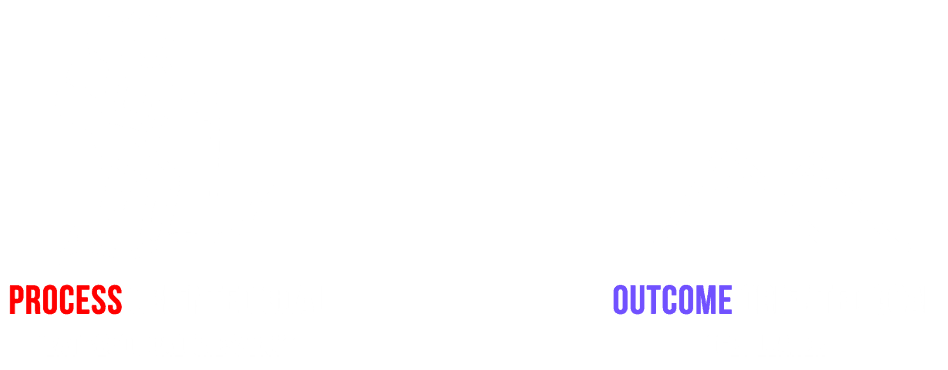
The whole idea behind this proposed model is that every action that we do has its underlying reason, and the final reason is our idea of an ideal self. If there is a miss-match between any of the levels of that scheme, then we will quickly realize that our effort doesn’t make sense. This is why it's important to frame goals in the right way and be very honest with our values and values of the people that we are working with as professionals.
Capability & Opportunity
Another concept worth applying for goal setting for behavioral change purposes, is that we want to make sure that when we set goals, we have the capability and opportunity to pursue and reach these goals.
Capability refers to the internal factors such as knowledge, mental and physical capacity, or skill set. Opportunity refers to all the external factors that can support or inhibit the goal being pursued. It defines whether we have resources, time, and the right environment to pursue the goals.
For example, a person may have the resources, time, and access to a gym, but lack the knowledge to start working out at the gym. On the other hand, someone may have the knowledge and previous experience to do calisthenics in the park. But the closest park to his home is 1 hour away by car, which makes it very difficult from a time management standpoint.
If this is true, then a goal has a very low chance of being pursued in the long run. What we need to do is either:
- fix our capability
- Fix our opportunity
- change the goal
For example, someone who lacks a skill can hire a coach, either in person or online. They can also gain knowledge by reading articles, books, or listening to podcasts. Someone else may equip themselves with the necessary tools to support their training program and not need the time to come to the park.
In both situations, goals can be modified. For example, a person who is injured and therefore unable to achieve a previously set goal can simply change the objective and choose a skill that can be pursued in the current condition.
Goal Setting - Athletic Context
Short Term & Long Term Goals
When you think about goal setting as a calisthenics athlete, you probably have the more specific, results-oriented goals in mind. Goal setting is where any program begins. Ultimately, every programming decision is dictated by the adaptations we want to make, and these are dictated by what we want to achieve.
When it comes to goal setting, two things are often confused. We often hear about long-term goals and short-term goals, but the only thing that makes them different is the assumed time it will take us to achieve them. However, the purpose of long-term and short-term goals is different.
It is good to think of long-term and short-term training goals as two separate and distinct types of goals.
- The long term goal is a certain vision that we want to get to without much specificity or granularity.
- The short-term goal is basically a checkpoint on the way to the long-term goal. Unlike the long-term goal, it should follow certain rules.

When setting up a long term goal, we really want to think about the long term vision that the athlete has. So, for example if we are coaching someone, this is the part that we have not much influence on. Long term goals don't have to be very well formulated or specific. It doesn’t have to be backed up by calculating if it's realistic or not and it certainly doesn’t have to be time-bounded. There is literally one thing that this goal should have. It should be truly relevant and exciting for the individual.
For example, if someone starts training with a vision of being able to compete, that's his long term goal. If someone has a certain specific element in mind like Iron Cross or One Arm Pull Up, this will drive the general direction of our training and dictate the steps along the way. And these steps along the way are the short term goals.
You can treat short term goals as the checkpoints that must be met one by one. The next short term goal that you are going after should be around 3 to 6 months in front of you (ideally 3). So, knowing an athlete's ambition and long term goal, a coach can propose a roadmap to achieving it. The goals that we set as short term are different and they have to have their sets of features.
You can use my modified SMART formula for this. I have modified the terms in the acronym so that it retains its form, but changed the components so that they are more appropriate to calisthenics and strength training in general, based on my experience.
- Specific - So they clearly contribute to the long-term goal
- Measurable - So we can see when we have achieved the goal
- Agitating - So they still feel exciting to pursue
- Realistic - So we can achieve them in 3-6 months
- Transferable - So (if possible) they can be transferred to other goals
As you can see in my modified SMART formula, there is no strict mention of time limit. There is so much inter-individual variability in the rate of progress that I don't see the benefit of setting time limits.
Sure, it can be motivating for some people, but it can be demotivating if we don't reach the goals in time, and that's going to depend a lot on the person. So it's just good to keep in mind that the next goal should be within 3 to 6 months, but not to put too much of our emotions into that time frame. The whole process looks like this:
- Based on the long term goal of the athlete we set short term goals aligned with the modified SMART formula
- We make our plan of action and goal breakdown
- We execute on the plan
- We reassess
- If everything seems to go in the right direction we just continue to do the same thing and progress towards our goals
- If we find things to feel stale and not progress, we can re-evaluate the goals setting process and find out if we could tackle the long term goal with a different roadmap
For example, let's say the athlete wants to learn full planche, this is their ultimate vision of calisthenics success. Based on that, we set up the logical steps that we need to achieve sequentially before reaching planche, and the first step in front of us becomes our goal, let's say a 10s handstand. And now that we know what we want, we set up the plan.
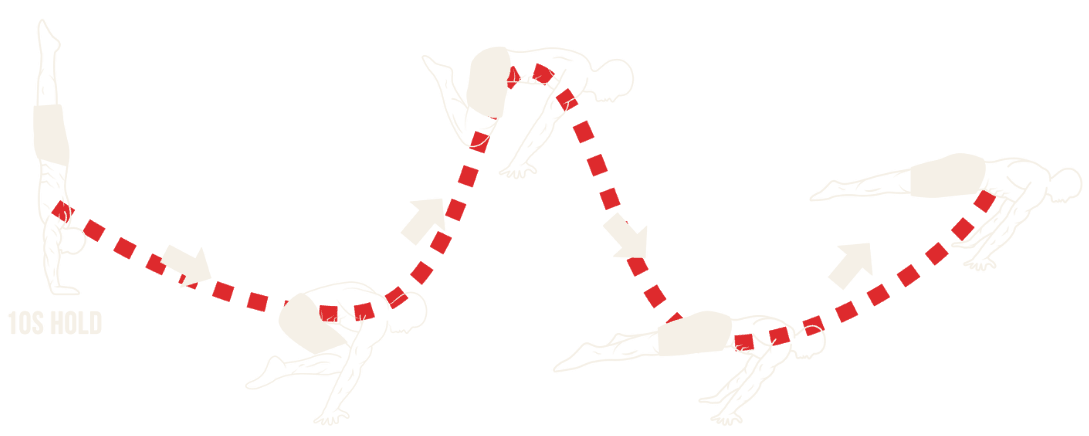
After a few months, we find that we have achieved the goal and can move on to the next one. On the other hand, we may find that we have stopped making progress toward the goal and something does not seem to be working. So we adjust the goals of the plan and try again with a slightly modified approach.
Remember that the goals we set, as well as what we do to achieve them, can be changed or modified, and that's just a natural part of the process.
Why Is Setting Goals Difficult in Calisthenics?
Goal setting in calisthenics can be more complex and cause more headaches compared to other strength disciplines. Let’s take powerlifting as a comparison. There are three main aspects that make it vastly different from calisthenics.
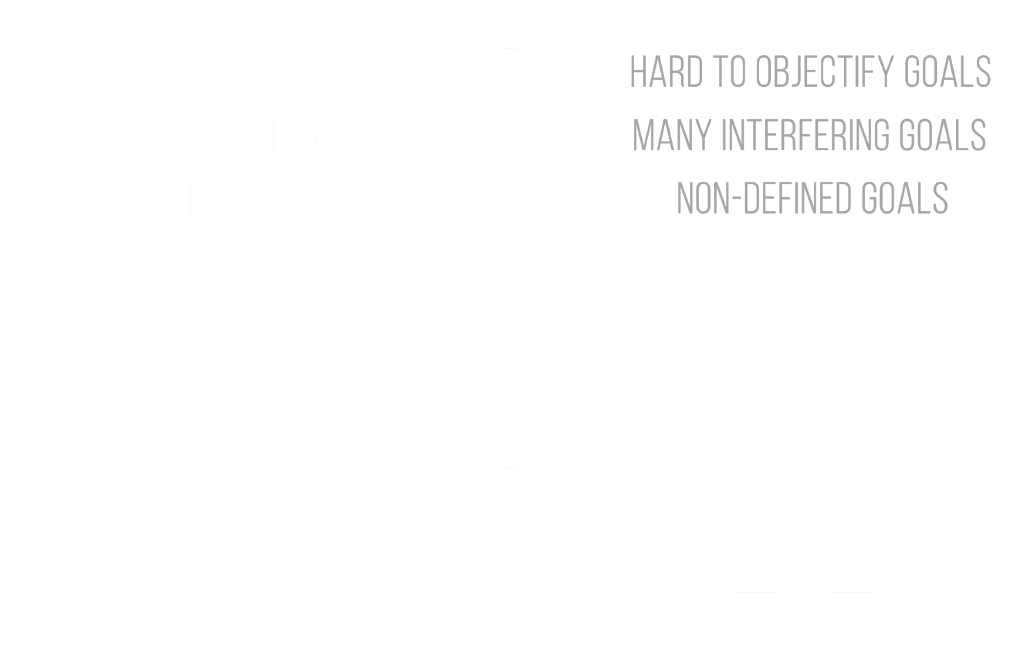
First, the goals in powerlifting are already defined for us. The goal is the essence of the sport itself - when we think of powerlifting, we think of numbers for the squat, the deadlift, and the bench press. In contrast, calisthenics offers a plethora of potential goals.
Second, the number of goals in powerlifting is limited to three, which don't interfere with each other as much. In calisthenics, there's a danger of choosing too many goals that use the same muscle groups, making them difficult to pursue simultaneously, since most calisthenics exercises rely heavily on upper-body musculature.
Finally, goals in powerlifting are defined by numbers at their core, which is rarely the case in calisthenics. It's much harder, or at least less intuitive, to monitor where we are on our journey because calisthenics is harder to quantify.
Calisthenics Goals in Early Novice Stage - Recommendations
Now let's move on to a discussion of specific recommendations for calisthenics athletes. Since the recommendations will vary greatly depending on the phase of development, we need to make a clear distinction between the novice and post-novice phases.
Let's start with the novice phase. In the very early stages of the novice phase, which we would define as the first 2-3 months of training, regardless of an athlete's long-term goals, my recommendation is not to set any outcome-oriented goals, but rather to focus on process-oriented goals.
The real goal at this early stage is to get the person accustomed to training and to develop their habits inside and outside of training. The highest leverage actions to focus on are:
- achieving the desired number of workouts per week
- becoming more coordinated in the movement patterns we set
- getting used to the demands of resistance training
Calisthenics Goals in Later Novice Stage - Recommendations
Once this mini-phase is over, we can begin to set some outcome-oriented goals. In my opinion, the novice phase should be very similar for every athlete when it comes to goals.
Here, regardless of long-term goals, the basic split I recommend is to choose one goal for each type of pull, push, and lower body compound movement from the Biomechanical Classification of Exercises:
- Upper Body Goals
- Push
- Vertical (Upward)
- Horizontal or Vertical (Downward)
- Pull
- Vertical
- Horizontal
- Push
- Lower Body Goals
- Squat
- Hinge/Thrust
For each of these categories, one exercise should be chosen, and a specific goal should be set. These exercises should be designed in a way that still matches the SMART recommendations, but we don’t need to worry because, in essence, the exercises from these categories will be specific and transferable to most things we may want to pursue in the future. We just want to make them measurable and fun.
After 6 to 10 months of moving towards these goals, reaching a certain level of strength and noticing the first signs of stalled progress, this is when the transition to the post-novice phase begins. This is also where the recommendations for goal setting also start to differ.
Calisthenics Goals in Post-Novice Stage - Recommendations
When dealing with calisthenics goal setting for individuals in the post-novice stage, this is where athletes become vastly different from each other in terms of their priorities and, naturally, the goals they set. In my opinion, beyond the basic movement patterns, the goals set at this stage should be fully dependent on the athlete’s long-term vision.
This phase, however, demands a more complex and strategic approach. It becomes crucial to categorize your goals based on the part of the body they train:
- Goals (Choose max 2 upper body goals)
- Push Goal
- Pull Goal
- "Other" Goal
- Lower Body Goal
In the post-novice phase, it's very important to recognize which goals complement each other and which might conflict. My recommendation is to set up two training goals that don't interfere with each other. To avoid interference, choose a maximum of one push goal and one pull goal. If you choose a push goal and want to have another goal, choose something from the lower body/core or other categories.
When long-term goals are chosen, creating a roadmap and following certain principles can help guide the process. There are additional principles that can be very useful when setting checkpoints according to the SMART formula.
One important principle is to move from the general to the specific. Early in the post-novice phase, your goals should still be somewhat broad, focusing on overall strength and conditioning. Even though it's a skill-specific goal, you can still make choices that promote broader development and transfer to other areas.
As you progress, your goals can become more specific, such as targeting areas of weakness. The same goes for starting with simple movements before moving on to more complex ones. For example, mastering a standard handstand should precede working on a handstand push-up, as the latter requires a higher level of coordination and strength.
These principles are icing on the cake, when it comes to successful goals setting.
What if I Achieve One Goal Out of a Couple?
If you choose to set two goals instead of one when you reach a particular checkpoint, you can take one of two approaches. The first method, which promotes excellence in one area, is to simply set a new checkpoint for that goal.
The second method, which promotes balance, is not to set a new checkpoint and instead focus all resources on achieving the second goal before moving on to the next checkpoint for the first goal.
In the first method, the goals are independent, in the other one they are interdependent. There is no definitive right answer here, it depends on the preferences of the athlete and the coach.
Calisthenics Goals Setting - Example
To illustrate how this applies in practice, let's consider a real-life scenario. Suppose someone with no prior experience comes to us for coaching with the intention of learning the planche over the next few years.
- In the first months, the goals we set are primarily related to behavior change and ingraining new habits
- After a few months, we decide to choose four specific goals that together address each part of the body. We continue setting milestones in all these categories and work to achieve them over time
- After a year of training, our athlete is ready to begin a specific planche journey
- Over the next few years, we continue setting checkpoints along the way, starting from broader goals and gradually moving to more specific ones, until we achieve the goal of a full planche, which was the athlete’s original vision
This entire roadmap and its stages promote breaking down a large and challenging skill-one that typically takes years to achieve-into many more manageable steps along the way, while focusing on what's important at each stage.